The Invisible Safety Net: Why Trust is a Child’s Greatest Catalyst
- The Impact Journal / On Feb 19, 2026
- Category: Your story, our platform

We spend a lot of time "managing" children. We manage their schedules, their screen time, their friendships, and their safety. We do it out of love, of course, and a healthy dose of fear. But in our rush to protect them from the world, we often forget to provide the one thing they need to actually survive it: Trust.
There is a profound psychological shift that happens when a child realizes they are being trusted. It is the difference between performing a task because they were told to, and performing it because they believe they can.
The Architecture of Self-Belief
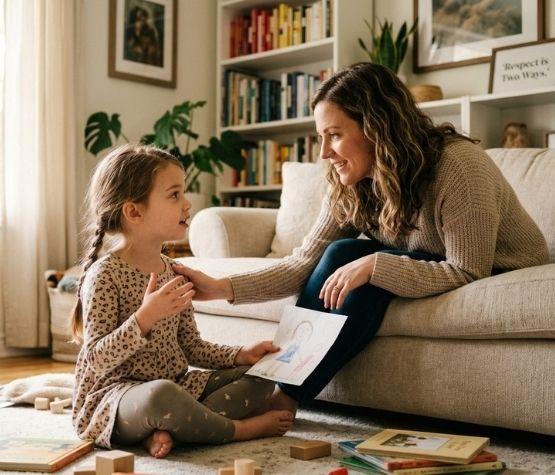
Trust isn't just a nice sentiment; it’s the scaffolding upon which a child builds their identity. When an adult trusts a child with a responsibility—whether it’s walking to the store alone, managing their own homework, or navigating a difficult social situation—they are sending a powerful, silent message: "I see your capability even before you do."
- The internal mirror: Children see themselves through our eyes. If we constantly hover, they see a person who is fragile and incapable. If we step back, they see a person who is resilient and resourceful.
- The weight of expectation: Contrary to popular belief, trust doesn't make kids "lazy." It actually raises the stakes. When someone believes in them, they don't want to let that person (or themselves) down.
The Risk of the "Safety First" Trap
The paradox of modern parenting is that by removing all risks, we create a new, larger risk: the inability to handle failure. A child who is never trusted to make a mistake never learns how to fix one. When we trust them, we are effectively giving them permission to fail in a controlled environment. They learn that a "mess" is just a problem waiting for a solution. They learn that their judgment has value.
"Trust is not the absence of supervision; it is the presence of belief. It is telling a child, 'The world is big, but you are big enough to meet it.'"
What Trust Actually Looks Like (And What It Isn't)
Trust is often misunderstood as "letting them do whatever they want." In reality, trust requires more effort than micromanagement.
- Trust is collaborative: It’s about setting a boundary and then letting them navigate within it. It’s saying, "The goal is X; I trust you to find the best way to get there."
- Trust is patient: It means watching them struggle with a knot or a math problem and keeping your hands in your pockets. It’s the "tender journey" of letting them find their own rhythm.
- Trust is a safety net, not a cage: They need to know that if they stumble—which they will—your trust in their potential doesn't break.
The Moment That Matters
When children are trusted, they don't just "behave" better; they thrive. They grow into adults who trust their own instincts, who aren't paralyzed by the fear of making the wrong choice, and who know how to build trust with others.
If you want to see a child truly bloom, stop trying to be the gardener who trims every leaf. Be the soil that stays steady while they reach for the sun.