That ‘Add to Cart’ Feeling After a Bad Day
- The Impact Journal / On Feb 26, 2026
- Category: Your story, our platform
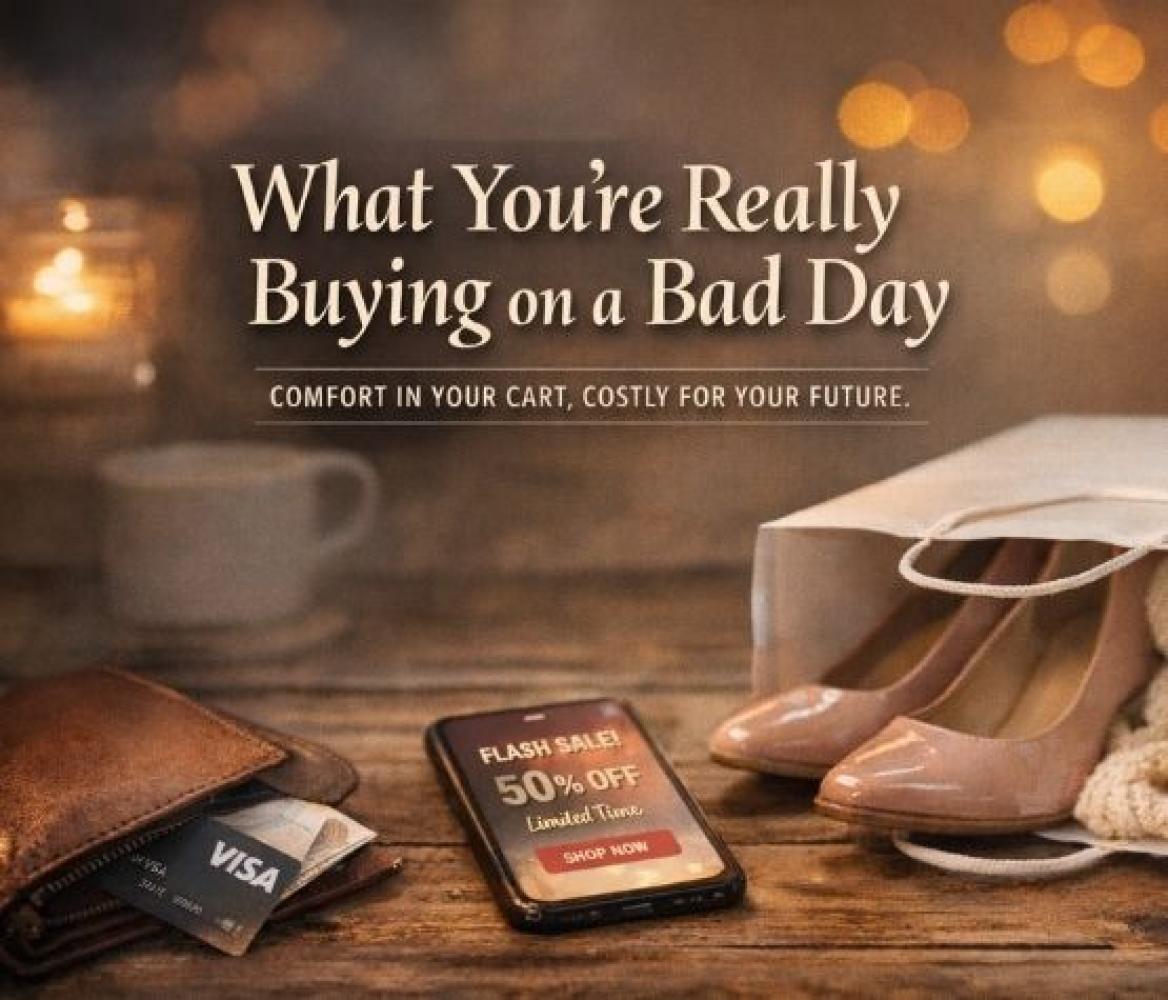
We’ve all been there. You’ve had a day that felt like a marathon run through a minefield. You’re exhausted, undervalued, and frazzled. Suddenly, your phone glows with a notification from your favorite brand, or you find yourself wandering the brightly lit aisles of a department store.
In that moment, a new pair of shoes or a high-end kitchen gadget doesn’t just look like a "want." It looks like the cure.
But before you swipe that card, let’s talk about why " Emotional spending" is often just a high-interest loan on your future happiness.
When a Bad Day Becomes an Expensive One
We’ve all had those days.
The kind that leaves you mentally drained, emotionally stretched, and quietly frustrated. You open your phone and see a sale notification. Or you wander into a store “just to look.”
And suddenly, that new pair of shoes doesn’t feel optional, It feels necessary.
In that moment, buying something seems like relief.
But here’s the truth: stress can become your worst financial advisor.
What feels like self-care may actually be a short-term emotional fix with long-term consequences.
Let’s understand why.
The Psychology of Stress Shopping
- Cortisol and Emotional Spending
When you're stressed, your body releases cortisol, the fight-or-flight hormone. It heightens urgency and reduces emotional regulation. You feel reactive instead of grounded. Shopping provides a fast distraction from discomfort.
- The Illusion of Control
On stressful days, life feels unpredictable. But choosing what to buy restores a temporary sense of control.
You can’t control your boss or deadlines. But you can control which product goes into your cart.
That illusion is powerful.
- The Dopamine Effect
Retail therapy works because it activates dopamine, the brain’s reward chemical.
Interestingly, research shows the brain gets a stronger dopamine hit from the anticipation of buying than from owning the item itself.
Scrolling. Comparing. Imagining.
That’s where the high lives. Ownership? Not so much.
Signs You’re Engaging in Retail Therapy
You may be stress-shopping if:
- You shop immediately after arguments or tough workdays
- You feel a rush during checkout but regret afterward
- You justify purchases as “I deserve this” without planning
- You hide purchases or avoid checking your bank balance
Recognizing the pattern is the first step toward breaking it.
The Impulse Buy Checklist
Before checking out — online or offline — run through this test.
If you answer “NO” to even one question, pause.
- The “Void” Test
Am I buying this because I truly need or love it — not just to fix a bad mood?
- The 48-Hour Test
If this item wasn’t available until next week, would I still return for it?
- The “Home” Test
Do I know exactly where this will live in my house right now?
- The Reality Test
Can I pay for this without feeling anxious about my bank balance tomorrow?
If any answer is “NO,” it’s not a purchase. It’s a coping mechanism.
And you deserve healthier ones.
Calm Cannot Be Purchased
Self-care is essential.
But true self-care often looks like:
- A long walk
- A quiet moment
- A real conversation
- Rest
Processing what you’re actually feeling. You cannot find emotional stability inside a shopping bag.
Protect your future self by keeping your wallet closed until your mind is clear. Your bank account — and your peace — will thank you.